Infrastructure Corridors Driving Regional Property Expansion
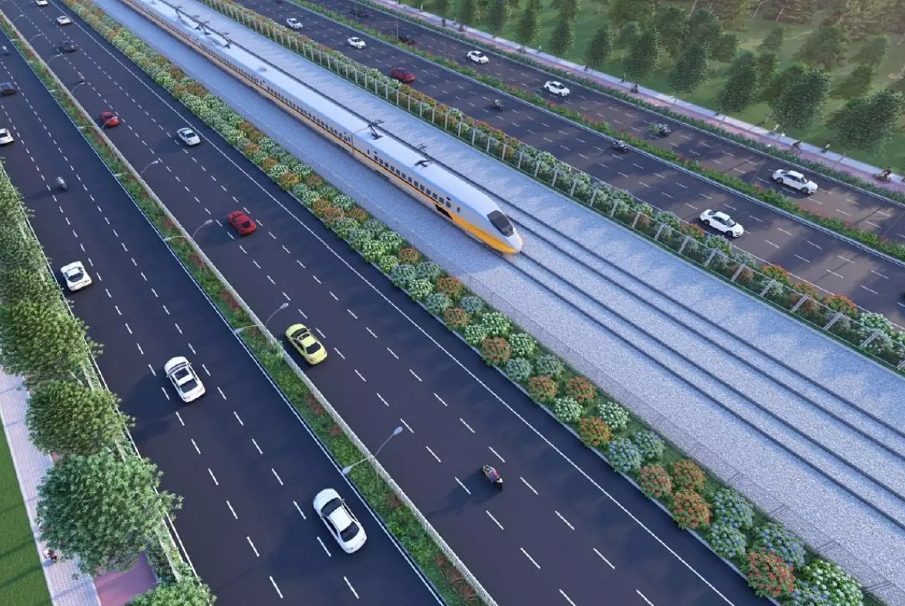
The growth of real estate has historically been tied to the path of accessibility. In the past, major cities grew around natural harbors, navigable rivers, and terminal railroad hubs. In the modern economic landscape, this principle remains unchanged, but the mechanism has evolved. Today, mega-scale infrastructure corridors serve as the primary engines driving regional property expansion, decentralizing dense urban cores and transforming previously undervalued rural or suburban areas into lucrative real estate hotspots.
An infrastructure corridor is a integrated, linear pathway that bundles multiple transportation, utility, and communication systems. These can include high-speed rail lines, multi-lane interstate expansions, freight routes, pipelines, and fiber-optic networks. By bridging the geographical divide between major economic hubs and peripheral sub-markets, these corridors fundamentally rewrite local land values. They dramatically lower travel times, streamline supply chains, and unlock thousands of acres of land for residential, commercial, and industrial development.
The Economic Catalyst of Connectivity
When governments and private entities commit billions of dollars to construct a regional infrastructure corridor, they change the economic geography of the entire region. The immediate consequence is a sharp increase in land utility. Peripheral towns that were once considered too remote for daily commuters or corporate distribution centers suddenly become highly viable options.
This transformation follows a predictable pattern often referred to as the ripple effect. Initial investments in transportation infrastructure stimulate land speculation along the designated route. Real estate developers buy up large parcels of agricultural or underutilized land adjacent to proposed highway interchanges or transit stations. As construction progresses, the anticipation of improved connectivity drives up raw land values, attracting secondary investments in municipal utilities, retail services, and localized commercial hubs.
Transit-Oriented Development and Residential Real Estate
One of the most visible manifestations of infrastructure-driven property expansion is Transit-Oriented Development. This planning concept focuses on creating compact, walkable, mixed-use communities centered around high-capacity transit nodes, such as commuter rail stations or bus rapid transit terminals along the corridor.
The diagram highlights how a structured infrastructure node acts as a gravitational center for regional real estate growth. By concentrating commercial cores and office spaces directly around the transit station, urban planners create a high-density nucleus that naturally tapers off into residential zones within a defined walking radius, typically two thousand feet. This specific layout offers several distinct advantages for the surrounding residential real estate market:
Mitigation of Urban Housing Shortages
As tier-one cities experience severe housing affordability crises, infrastructure corridors allow buyers to move further out without sacrificing their careers. A high-speed rail corridor can turn a stressful two-hour highway drive into a comfortable forty-five-minute train ride. This shifts the commuter consumer perspective, making regional towns along the corridor highly attractive for young families and remote workers seeking larger homes and a lower cost of living.
Sustained Premium Property Valuation
Residential properties located within the designated transit-oriented development zone consistently command a premium value compared to identical properties situated further away from the corridor. The permanent guarantee of accessibility insulates these micro-markets from broader economic downturns, ensuring strong long-term capital appreciation for homeowners and real estate investors alike.
Logistics, Industrial Hubs, and Commercial Real Estate
While residential growth often captures public attention, the impact of infrastructure corridors on industrial and logistics real estate is arguably more profound. The explosive growth of e-commerce has made supply chain efficiency a decisive factor for corporate profitability. Companies require vast networks of fulfillment centers, sorting facilities, and truck terminals strategically positioned to move goods rapidly.
Modern infrastructure corridors create perfect ecosystems for these operations. Industrial developers seek out cheap land situated directly along major freight corridors, particularly near intersections where regional highways meet interstate networks. This has given rise to massive inland ports and logistics parks far outside major municipal boundaries.
-
The Rise of Mega-Fulfillment Centers: Industrial corridors allow retailers to construct automated fulfillment centers spanning over one million square feet. These locations offer direct, unimpeded access for long-haul trucks, allowing companies to bypass the gridlock and high toll expenses of inner-city traffic.
-
Agglomeration Economies: When a major logistics hub establishes itself along an infrastructure corridor, it triggers an agglomeration effect. Third-party logistics providers, packaging suppliers, maintenance facilities, and manufacturing plants flock to the same area to reduce operational friction. This collective influx transforms quiet rural counties into major employment centers, driving secondary demand for local commercial retail, dining, and hospitality real estate.
Smart Corridors and Future-Proofed Infrastructure
The newest generation of infrastructure corridors goes beyond asphalt and steel tracks. Modern regional development increasingly relies on smart corridors, which integrate physical transportation lines with digital and green utilities, such as underground high-voltage direct current cables, municipal water mains, and industrial fiber-optic trunk lines.
Real estate development along a smart corridor is inherently future-proofed. High-tech manufacturers, data center operators, and clean-energy facilities require massive amounts of electrical power and high-speed data connectivity to function. Traditional urban areas often struggle to provide this utility density due to aging grids and bureaucratic limitations.
By guiding industrial expansion along pre-serviced smart corridors, regional authorities can accommodate data-heavy and energy-intensive enterprises seamlessly. This specialized infrastructure capacity triggers substantial commercial land sales and creates high-paying technical jobs, completely reshaping the socioeconomic profile of the host region.
Challenges and Strategic Considerations for Investors
While the real estate opportunities created by infrastructure corridors are immense, investing in these zones requires careful due diligence and a tolerance for long development horizons. Land speculation along a corridor is not without financial risk.
The primary challenge is timeline volatility. Large-scale public infrastructure projects are notorious for bureaucratic delays, environmental lawsuits, budget deficits, and political shifts. A commuter rail line scheduled for completion in five years can easily take ten to fifteen years to materialize. Investors who buy speculative land with high-interest debt based on a fast timeline can face severe financial distress if the infrastructure deployment stalls.
Furthermore, developers must carefully evaluate the exact placement of access points along the corridor. Being near an infrastructure line is meaningless if there is no physical access. A property sitting right next to a high-speed rail line or a major interstate will suffer from noise pollution and depressed values unless it is directly serviced by a transit station or a highway interchange. Successful regional expansion requires deep coordination between private developers, municipal zoning boards, and state transportation authorities.
Frequently Asked Questions
What is the difference between a standard highway expansion and a dedicated infrastructure corridor?
A standard highway expansion focuses primarily on increasing vehicular lane capacity to relieve local traffic congestion. A dedicated infrastructure corridor is a comprehensive, multimodal right-of-way that integrates multiple systems simultaneously, such as passenger rail, heavy freight lines, high-capacity utility grids, and fiber-optic communication channels, purposefully designed to catalyze regional economic and real estate development across multiple states or municipalities.
How do municipal authorities manage zoning changes along a new infrastructure corridor?
Municipalities typically respond to a new corridor by implementing overlay zoning districts, such as Transit-Oriented Development zones. These special districts overwrite traditional, low-density zoning regulations, allowing for significantly higher floor-area ratios, mixed-use land integration, and reduced mandatory parking minimums near transit nodes. This legal flexibility encourages developers to construct high-density apartments and commercial retail centers where they are needed most.
Does the development of an infrastructure corridor negatively impact agricultural land values?
The impact is dual-natured. Agricultural land directly inside or adjacent to the planned corridor right-of-way undergoes a massive transformation, shifting from agricultural valuation to high-value commercial or industrial zoning, which benefits landowners looking to sell. However, surrounding farms that remain active can face challenges, such as fragmented fields, altered natural water drainage patterns, and localized inflation of labor costs driven by the incoming industrial and commercial sectors.
How do data centers leverage the infrastructure corridors for site selection?
Data centers require exceptional fiber-optic connectivity and massive, uninterrupted electrical power. Infrastructure corridors frequently bundle high-capacity fiber trunks and electrical transmission lines beneath or alongside transportation routes. By selecting sites along these corridors, data center operators can secure direct connections to backbone internet infrastructure and regional power grids while avoiding the high land costs and strict zoning restrictions of major metropolitan areas.
What role does public-private partnership play in financing these corridors?
Public-Private Partnerships are long-term agreements where private consortiums inject capital, management expertise, and technological innovation to design, build, and operate public infrastructure. In return, the private entity receives regular government payments or direct user toll revenues over several decades. This model accelerates project delivery timelines, lowers the financial burden on taxpayers, and provides real estate developers with greater certainty regarding infrastructure completion dates.
How can small business owners capitalize on regional property expansion along a corridor?
Small business owners can secure early footholds in secondary or tertiary markets situated near planned corridor interchanges or transit nodes. As residential populations shift to these affordable regions, demand for hyper-local services, such as medical clinics, daycare centers, specialized trade workshops, and boutique retail, scales rapidly. Purchasing or leasing commercial space before the corridor becomes operational allows small businesses to secure lower overhead costs and build long-term local market equity.